
MENU

Category: Blog

Your blog category

Driver Guide in Baku for Flexible Private Days

Driver Guide in Baku for Flexible Private Days

Baku is easy to admire from a distance, but it is far more rewarding when someone local helps you connect the stops. A driver guide in Baku gives you private transportation, practical local knowledge, and the freedom to spend more time where your family, partner, or group is genuinely interested. Instead of figuring out parking, taxi apps, route changes, and opening times as you go, you can focus on the city itself.

For first-time visitors to Azerbaijan, this arrangement is especially useful. Baku combines a preserved walled old town, grand 19th-century boulevards, striking contemporary architecture, coastal views, and busy local neighborhoods. The places are close enough to combine in one day, yet different enough that a well-planned route makes a real difference.

What a Driver Guide in Baku Can Do for Your Trip

A private driver guide is more than a ride between attractions. The right person keeps the day moving at a comfortable pace, suggests sensible timing, explains what you are seeing, and adjusts the route when weather, traffic, or your energy level changes. This is valuable after an overnight flight, when you may want a relaxed introduction to the city rather than a fixed group schedule.

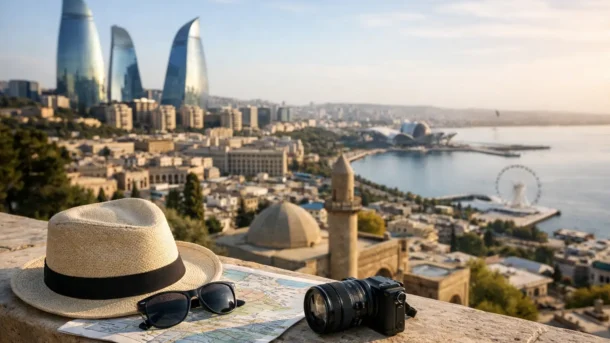
In Baku, a typical private sightseeing day may include the Old City, also known as Icherisheher, the Maiden Tower area, Palace of the Shirvanshahs, Highland Park, Flame Towers viewpoints, the Baku Boulevard, and the Heydar Aliyev Center exterior. Your guide can help decide whether it makes sense to add a museum visit, a traditional lunch, shopping time, or a sunset stop by the Caspian Sea.

The main benefit is flexibility. If you love photography, you can allow extra time in the Old City’s narrow streets or at the panoramic viewpoint above the city. If you are traveling with children, you may prefer shorter walks, breaks for snacks, and a simple route with fewer formal sites. Couples often choose a slower evening itinerary, while small groups may want to fit more highlights into a single day.

Driver, Guide, or Both?

Travelers sometimes use “driver guide” to mean different things. A driver may provide comfortable private transport and basic local assistance, while a dedicated professional guide can offer deeper historical and cultural interpretation at major attractions. In some cases, one person can comfortably handle both roles for a relaxed city tour. For a detailed museum visit, a large group, or a day focused on history, having a driver and separate guide can be the better choice.

Ask clearly what is included before booking: the vehicle type, language support, pickup point, tour duration, fuel and parking, guide services, entrance fees, and meals. Clear details prevent misunderstandings and help you compare private options fairly.

Build a Baku Day Around Your Travel Style

A good Baku itinerary should not feel like a checklist. The city can be seen in a few hours, but the experience is better when the route matches the way you travel.

For a first full day, start with the Old City in the morning, when temperatures are usually more comfortable and the stone lanes are quieter. Continue to the waterfront and modern center after lunch, then finish at Highland Park near sunset. This order balances walking, driving, and views without repeatedly crossing the city.

If your time is limited, a driver guide can meet you at the airport or hotel and organize a half-day orientation. This works well for travelers arriving early, cruise visitors, or guests who want to understand Baku before beginning a multi-day Azerbaijan itinerary. A few hours can cover the main viewpoints and historic center without the pressure of navigating an unfamiliar city.

Those with two or more days in Baku have more choices. One day can stay within the city, while another can head beyond it to the Absheron Peninsula. The fire temple at Ateshgah, the naturally burning hillside of Yanar Dag, and coastal or village stops can be combined depending on the season and your interests. These sites are easier to reach by private vehicle than by trying to coordinate several separate taxis.

When a Private Vehicle Matters Most

Baku’s central districts are walkable, and walking is the best way to experience parts of the Old City and Boulevard. But the city’s key attractions are spread across different elevations and neighborhoods. Highland Park, the Heydar Aliyev Center, and Absheron sites are not always convenient to connect on foot, particularly in summer heat, rain, or windy weather.

A private vehicle also matters when you are traveling with luggage, young children, older relatives, or guests who prefer fewer long walks. It gives your group a place to keep water, jackets, shopping bags, and child essentials. For families, that small practical advantage can make the whole day feel easier.

It depends on your plans, of course. Budget-minded solo travelers staying near the Old City may be perfectly happy walking and using local taxis for short trips. A driver guide becomes more valuable when your schedule is tight, your group has different needs, or you want to leave the city for a half-day or full-day experience.

Choosing the Right Vehicle

Do not choose only by the lowest price. A sedan is usually suitable for one to three travelers with light luggage, while a minivan offers more comfort for families and small groups. Larger groups may need a van or minibus, especially if they are carrying suitcases after an airport pickup.

Comfort also depends on the route. For city roads and the main attractions around Baku, a standard private vehicle is normally enough. If you plan to include mountain regions later in your trip, such as Gabala, Guba, Qusar, Shamakhi, or Sheki, discuss the road conditions, travel distance, and vehicle space in advance. The best vehicle for a Baku city day is not always the best choice for a multi-day journey.

Questions to Ask Before You Book

A dependable local operator should answer practical questions directly and without vague promises. Confirm the pickup time and location, how long the service lasts, whether waiting time is included, and what happens if your flight is delayed. If you have a preferred language, ask whether your driver guide speaks it confidently or whether a separate guide is recommended.

It is also wise to share your priorities before the route is finalized. Mention mobility needs, dietary preferences, children’s ages, photography interests, or whether you would rather visit museums, markets, architecture, or nature. A private day should be designed around your interests, not built from a standard route with no room to adapt.

Reviews can help, but read beyond star ratings. Look for comments about punctuality, clear communication, clean vehicles, thoughtful route planning, and how the team handled changes during the trip. These are the details that matter most when you are booking from another country and need someone reliable on the ground.

Tours in Azerbaijan can arrange private Baku experiences with local support from planning through pickup, making it easier to combine city sightseeing with airport transfers or a longer Azerbaijan tour package. Direct communication before arrival is helpful when you need to adjust a plan, add a hotel transfer, or decide between a city day and an Absheron excursion.

Make Time for the Unplanned Stop

The best part of a private day in Baku is often not the landmark you expected to see. It may be a quiet Old City courtyard, a tea break with a Caspian view, a local bakery recommendation, or an extra photo stop when the evening light hits the skyline. Leave a little space in your schedule for those moments. A thoughtful driver guide will know when to keep moving and when a small detour is worth it.

Private Guide or Group Tour in Azerbaijan?

Private Guide or Group Tour in Azerbaijan?

Baku’s Old City can feel wonderfully intimate at sunrise, while the road to Gabala, Sheki, or Qusar can turn into a long day if every stop is rushed. That is why choosing a private guide or group tour matters more than many travelers expect. Both options can show you Azerbaijan’s landmarks, mountain scenery, food, and culture. The better choice depends on how you like to travel, who is traveling with you, and how much flexibility you want along the way.

For visitors arranging a trip from abroad, a guided tour also removes practical questions: who will meet you, how will you reach the attractions, where can you stop for lunch, and what happens if plans change? Here is an honest look at the differences so you can book with confidence.

Private Guide or Group Tour: The Main Difference

A group tour follows a shared plan. You travel with other guests, meet at a fixed time and place, and visit the attractions in a set order. It is usually the lower-cost option per person and can be a good fit for solo travelers, first-time visitors, or anyone who enjoys meeting people from different countries.

A private tour is arranged for you and your own travel party. You may be traveling as a couple, a family with children, or a group of friends. Your driver-guide, vehicle, pickup time, and daily pace are focused on your needs rather than a full bus schedule. Private does not always mean every minute is unplanned. It means the itinerary can be shaped around what matters most to you.

In Azerbaijan, this distinction is especially useful because distances and travel styles vary. A city tour of Baku is very different from a full-day trip to Gobustan and the Absheron Peninsula, and a multi-day journey through Shamakhi, Gabala, and Sheki needs more coordination than a short sightseeing excursion.

When a Group Tour Is the Right Choice

A group tour is often the practical choice when your dates are fixed, your budget is a priority, and you are happy to see the most popular highlights on a proven route. You know the departure time, the major stops, and the expected return time before the day begins. That structure can be reassuring when you have only a few days in Baku.

It can also add a social side to travel. You may share photos at the Mud Volcanoes, swap restaurant ideas with other guests, or simply enjoy the energy of a day out with fellow travelers. For solo visitors, that company can make a full-day excursion feel more relaxed.

The trade-off is pace. Group departures need to keep moving so everyone can enjoy the planned itinerary. If you want 40 extra minutes at a mountain viewpoint, prefer a quiet tea stop, or need a slower schedule for children or older relatives, the group’s timing may not match yours. Pickup locations and meal breaks are also usually set in advance.

A group tour is best when the itinerary itself is your priority. You want to visit the essential places efficiently, at a clear price, with transport and guidance already organized.

Why Travelers Choose a Private Guide in Azerbaijan

Private travel is about more than having a vehicle to yourself. It gives you the freedom to make the day feel like your own. Perhaps you want to leave Baku early to reach Gobustan before the busiest hours. Maybe your family wants more time at a lake near Gabala, or your group wants to include a local food stop on the way to Quba and Qusar. Those choices are much easier on a private itinerary.

This is particularly valuable for multi-day routes. A couple traveling from Baku to Sheki may want to pause at the Juma Mosque in Shamakhi and spend longer around Nohur Lake. An adventure-minded group may want to build hiking, skiing, paragliding, or nature walks into a wider mountain trip. With a private guide, the route can be planned around those interests from the start.

Private tours also offer greater comfort for travelers who value door-to-door support. Airport pickup, hotel collection, luggage space, child seats when requested, and timing around a flight or hotel check-in are easier to arrange when the service is built around one party. If weather changes in the mountains or a child needs a break, there is more room to adapt.

That flexibility has a cost. Private tours generally cost more than joining a shared departure, especially for one or two travelers. For families and small groups, however, the price per person can become more reasonable, while the convenience can be significantly higher.

Local insight feels more personal

On either type of tour, a knowledgeable guide helps turn a beautiful place into a meaningful visit. But private touring creates more opportunities for conversation. You can ask about Azerbaijani traditions, food, architecture, religion, local life, or the best places to spend your free evening in Baku. You are not limited to a quick question between stops.

A good local guide also knows when the published plan needs a practical adjustment. Roads, seasonal conditions, traffic, attraction hours, and weather can affect a day’s route. The goal is not to force a schedule at all costs. It is to help you have a safe, enjoyable experience without spending your vacation solving logistics.

Think About Your Travel Party Before You Book

The right tour format often becomes obvious when you consider who is traveling with you. Couples commonly choose private tours for a more relaxed pace, scenic photo stops, and customized dining or sightseeing preferences. Families may appreciate the ability to start later, carry essentials in the vehicle, and take breaks without worrying about holding up other guests.

Small groups of friends can benefit from sharing the cost of a private vehicle while keeping the day flexible. This works well for travelers who want a mix of sightseeing and activities, such as a cable car ride in Gabala, a nature walk near Qusar, or a ski day in Shahdag.

Solo travelers should not assume that private is unnecessary. If you prefer personal support, have limited time, or want a route beyond the usual day-tour schedule, a private guide can still be worthwhile. On the other hand, a group tour may offer better value and a welcome chance to connect with other travelers.

Travelers with mobility concerns, young children, dietary needs, or a strong preference for a slower day should discuss those details before booking. A reliable local operator will explain what is realistic for the route rather than promising an itinerary that feels good on paper but is uncomfortable in practice.

Compare More Than the Price

A lower advertised price is appealing, but it should not be the only comparison point. Ask what is included in the tour: transportation, guide service, entrance fees, meals, hotel pickup, and the length of the day. Confirm the language of guidance and whether the itinerary has fixed stops or can be adjusted.

For a private trip, it is useful to ask what level of customization is possible. Can you choose the pickup time? Can the route include attractions that are important to you? Is there support with hotel planning, airport transfers, or practical travel questions before arrival? Clear answers make the booking process easier and help avoid surprises on the road.

For a group tour, check the maximum group size and the meeting arrangements. A small group in a comfortable vehicle has a very different feel from a large coach tour. Neither is automatically better, but travelers deserve to know what they are booking.

At Tours in Azerbaijan, travelers can discuss their dates, interests, and travel party directly before choosing a tour. That simple conversation is often the fastest way to decide whether a shared day trip or a customized private package will serve your plans better.

Choose the Experience You Will Enjoy Most

Choose a group tour if you want a straightforward, social, budget-friendly way to see Azerbaijan’s main attractions on a planned schedule. Choose a private guide if your time is limited, your itinerary has special interests, or you want the freedom to travel at your own pace.

The best trip is not the one with the longest list of stops. It is the one that leaves enough room to enjoy the view, ask the questions you came to ask, and return to your hotel feeling that Azerbaijan was welcoming rather than complicated.

Custom Azerbaijan Tour Planning Made Easy

Custom Azerbaijan Tour Planning Made Easy

Azerbaijan is compact on a map, but the experiences can feel worlds apart. You can have breakfast beside Baku’s Caspian waterfront, walk through ancient rock carvings in Gobustan, and end the next day among the green mountain views of Gabala or Sheki. That variety is exactly why custom Azerbaijan tour planning makes a real difference. A private route lets you spend time where it matters to you instead of following a fixed schedule built for everyone else.

For travelers booking from abroad, the details matter as much as the sights. Reliable transport, realistic driving times, a guide who can explain local customs, and someone available when plans change can turn a good vacation into an easy one. A well-planned private trip brings those pieces together before you arrive.

Start With the Kind of Trip You Want

The best itinerary does not begin with a long list of attractions. It begins with your travel style. A couple planning a relaxed getaway may prefer Baku, Shamakhi, Gabala, and Sheki with comfortable hotels and unhurried evenings. A family may want shorter drives, child-friendly stops, and flexible meal breaks. A group of friends may be more interested in hiking, skiing, paragliding, or a weekend in the Greater Caucasus.

Think about the pace you enjoy. Azerbaijan has excellent options for a three-day city-and-nature break, but travelers with seven to 10 days can explore several regions without rushing. Trying to fit Baku, Gobustan, Absheron, Gabala, Sheki, Guba, Qusar, and mountain activities into a short visit can create too much time in the car. A custom plan should protect time for the places you came to enjoy.

It also helps to decide what deserves priority. Your trip might center on food, architecture, mountain scenery, history, outdoor activity, or a mix of each. There is no wrong answer, but being clear about your preferences helps a local planner build a route that feels personal rather than packed.

How Custom Azerbaijan Tour Planning Works

A practical private itinerary starts with a few simple details: your travel dates, group size, arrival and departure times, preferred hotel standard, interests, and any mobility or dietary needs. From there, a local operator can recommend a route based on actual road conditions, seasonal weather, and the time needed at each stop.

Airport pickup is often the best place to begin. After a long international flight, arranging a transfer in advance removes the stress of finding transportation, handling local currency immediately, or explaining your hotel address. It also gives you a direct point of contact on the ground from the moment you land.

Next comes the route. Baku works well as a first base because it combines the Old City, modern architecture, museums, restaurants, and the Boulevard in one easily accessible area. Day trips to Gobustan and Absheron can be added without changing hotels. For travelers who want mountains and cultural towns, the route can then continue west toward Shamakhi, Gabala, and Sheki, or north toward Guba and Qusar.

The value of customization is not simply choosing more stops. It is arranging them in the right order. For example, an overnight stay in Sheki can be far more enjoyable than a same-day return to Baku after a long drive. Likewise, travelers heading to Shahdag or Qusar may prefer to stay in the north for skiing, hiking, or mountain views rather than treating the region as a quick visit.

Build a Route That Matches Your Available Time

A short visit can still feel complete when the route is focused. With three or four days, Baku plus Gobustan and Absheron is a strong choice. You can see mud volcanoes, ancient petroglyphs, the Fire Temple, and natural burning gas sites while keeping your hotel base in the capital. This option suits first-time visitors who want a balanced introduction without long transfers.

With five to seven days, it becomes easier to add Gabala, Shamakhi, and Sheki. This route offers changing landscapes, from the dry Absheron Peninsula to forested foothills and historic caravan-era towns. Sheki is especially rewarding for travelers who enjoy traditional architecture, local crafts, and a slower evening away from the city.

For an eight- to 10-day trip, a north-and-west circuit can work well. After Baku and the nearby historical sites, travelers can include Guba, Qusar, Shahdag, Gabala, and Sheki. The exact route depends on your departure airport, hotel preferences, and how much time you want for activities versus sightseeing. More destinations are not always better. In many cases, adding an extra night in a mountain region creates a better trip than adding another long transfer.

Choose Experiences, Not Just Destinations

A destination name alone does not tell the whole story. Gabala can mean cable car views, lakeside walks, family activities, or a quiet nature stay. Qusar can be a winter ski break, a summer mountain escape, or a base for more active travel. Baku can be focused on history and museums, evening dining, or a relaxed city introduction before traveling onward.

When planning a private tour, ask what is actually included at each stop. Transportation is essential, but so is knowing whether you want a guide for the full journey, entrance tickets arranged in advance, hotel support, or time for independent exploration. Some guests prefer a guide throughout the day. Others like a driver-guide for key locations and free time in the evening. The right choice depends on your confidence traveling independently and the type of experience you want.

Active travelers should also be realistic about fitness, weather, and season. Hiking routes, peak climbing, and paragliding are more dependent on conditions than city tours. Winter travel near Shahdag may be ideal for snow activities, while spring and early fall are often more comfortable for sightseeing and nature walks. A flexible plan should include alternatives in case weather affects an outdoor activity.

Leave Room for Flexibility

The strongest itineraries have structure without feeling rigid. A private driver and guide can adjust a departure time, allow an extra photo stop, recommend a local lunch, or shorten a day when children are tired. That flexibility is especially useful in Azerbaijan, where a scenic roadside view or a welcoming village café can become one of the most memorable parts of the trip.

At the same time, flexibility has limits. Popular hotels, ski-season rooms, and certain activities may need to be booked ahead. If you are traveling during a holiday period or summer peak dates, planning early gives you better choices. A good local team will explain what should be confirmed in advance and what can remain open until you arrive.

Before confirming your trip, make sure you understand the practical details. Ask about vehicle type for your group and luggage, driving times between overnight stops, hotel locations, guide language, activity requirements, and what is included in the quoted price. Clear answers before booking are a good sign that support will be equally clear during your trip.

Get Local Help Before and During Your Visit

Booking with a local operator is most valuable when communication is direct. You should be able to share changes, ask questions, and get practical help without waiting days for an answer from a distant platform. Tours in Azerbaijan creates private routes around your dates and interests, with assistance for transportation, accommodations, guided visits, airport transfers, and e-visa access when needed.

Travelers often focus on the major attractions, but local guidance can improve the smaller decisions too. Which neighborhood is best for your hotel? Is a day trip comfortable for young children? Should you stay an extra night in Sheki? Is it better to visit the mountains first or save them for the end? These are the choices that shape how your trip feels.

Bring your wish list, even if it is incomplete. Share the places you have seen online, the activities you are considering, and the pace you prefer. A thoughtful custom itinerary will turn those ideas into a route with sensible travel times, welcoming stays, and enough open space to enjoy Azerbaijan as it happens.

Guided Tours Baku Travelers Actually Enjoy

Guided Tours Baku Travelers Actually Enjoy

Landing in Baku without a plan can feel exciting for about an hour. Then the questions start – how far is Gobustan, which old streets are worth your time, how do you fit the Flame Towers, the Old City, and the Caspian Boulevard into one day without rushing? That is exactly why guided tours Baku visitors choose tend to be the difference between a busy trip and a well-organized one.

Baku is easy to admire at a glance, but harder to navigate well if you want more than photos. The city blends medieval walls, Soviet-era layers, bold modern architecture, seaside promenades, food culture, and quick access to day-trip landscapes that feel completely different from the capital. A good tour helps you move through all of that with less guesswork and more confidence.

Why guided tours Baku visitors book make a real difference

Most travelers coming to Azerbaijan are not just booking a city walk. They are trying to understand how Baku fits into the rest of the country. The capital is often the starting point for everything else – Gobustan, Absheron, mud volcanoes, mountain regions, family trips, and multi-day routes toward places like Sheki or Gabala.

That makes the quality of your first tour matter more than people expect. A reliable local guide does not just explain landmarks. They help with timing, route planning, practical advice, pickup coordination, and small decisions that shape the whole trip. If you are visiting from abroad, that support is often worth as much as the sightseeing itself.

There is also the issue of pace. Some travelers want a compact city introduction in half a day. Others want a private full-day plan with stops for viewpoints, museums, lunch, and extra time in the Old City. Guided tours work best when they are built around your travel style, not when you are forced into a one-size-fits-all schedule.

What to expect from guided tours in Baku

The best guided tours in Baku usually start with convenience. Hotel pickup, clear timing, comfortable transportation, and a guide who knows how to adjust the day are not extras – they are what make the experience feel easy.

For first-time visitors, the core city route often includes Icherisheher, also called the Old City, where narrow stone streets, historic caravanserais, and landmarks like Maiden Tower create the classic image many people associate with Baku. From there, tours often continue toward the Flame Towers viewpoints, Highland Park, and the Baku Boulevard along the Caspian Sea. Depending on the format, you may also include the Heydar Aliyev Center from the outside or as part of a longer architectural route.

The right setup depends on your priorities. If history matters most, you may want more time in the Old City and museum stops. If you are traveling with children, a smoother route with less walking and more drive-between points can work better. If you are a couple with limited time, a private evening city tour may be more appealing than a daytime schedule.

That flexibility matters because Baku is not a city people experience in only one way. Some travelers want heritage and culture. Others want skyline views, modern buildings, local food, and a polished first look at Azerbaijan. A dependable operator should be able to shape the day around that.

City tours versus day trips from Baku

One common mistake is treating Baku as only a city-break destination. In reality, some of the most memorable guided experiences begin in the capital and continue far beyond it.

A city tour is ideal if you have just arrived, are staying only a short time, or want an easy introduction before traveling elsewhere. It helps you get oriented and gives context to what you will see in the rest of the country. But if your schedule allows, many travelers get even more value from adding a nearby day tour.

Gobustan is a strong example. It offers ancient rock carvings, dramatic semi-desert scenery, and access to the mud volcano area, which feels completely different from central Baku. Absheron tours add another side of the region, with sites such as the Ateshgah Fire Temple and Yanardag, the burning mountain. These tours are especially useful for travelers who want variety without changing hotels.

There is no universal right choice. If this is your first day in Azerbaijan and you want a comfortable start, stay in the city. If you have already seen Baku’s main landmarks, then a day trip may give you a better sense of the country’s diversity.

Private or group: which guided tour fits better?

For many international travelers, private tours are the more comfortable option. They give you control over timing, pace, and pickup arrangements. That matters if you are traveling as a couple, with children, with older relatives, or with a small group that wants a more personal experience.

Private guided tours also make it easier to ask questions, spend longer where you are most interested, and skip places that are less relevant to you. If your goal is convenience and local support, this format usually delivers the smoothest experience.

Group tours can still work well, especially for solo travelers or visitors focused on price. They are often efficient and social, and for standard routes they can be a practical choice. The trade-off is less flexibility. Departure times are fixed, stop durations are shared, and the day moves at the pace of the group.

If you are trying to decide, think less about budget alone and more about what kind of trip you want. Some travelers save on a group tour and feel happy with the structure. Others realize quickly that private service would have helped them enjoy the day more.

What makes a Baku tour operator worth trusting

Travelers booking from abroad usually care about the same few things. Will someone answer quickly? Will airport pickup or hotel coordination be handled properly? Will the guide actually speak clearly and help when plans change? These are practical questions, and they matter more than polished marketing.

A trustworthy local operator should make booking feel straightforward. Communication should be direct, timings should be clear, and the tour description should match the real experience. Reviews also matter, not as decoration, but as proof that previous travelers felt supported.

This is where local knowledge becomes a real advantage. A certified local operator can tell you when to start earlier to avoid crowds, whether a route works better in the morning or evening, and how to combine Baku with other destinations without wasting time. For travelers who want both structure and flexibility, that kind of support is often what turns interest into a booking.

Tours in Azerbaijan focuses on exactly that kind of planning – practical guidance, responsive communication, and private travel experiences that feel organized from the first inquiry.

How to choose the right guided tours Baku offers

Start with your schedule. If you have one full day in the capital, a city tour with a few major landmarks may be enough. If you have two or three days, combining Baku with Gobustan or Absheron usually makes the trip more rewarding.

Then think about who you are traveling with. Families often need easier pacing, more direct transport, and less waiting around. Couples may prefer private city tours with flexible stops and time for photos or meals. Adventure-oriented travelers may want Baku as a base before moving on to hiking, nature routes, or mountain regions.

It also helps to decide how much support you want beyond the tour itself. Some travelers are comfortable handling everything on their own once they arrive. Others want help with airport transfers, hotel advice, and building a wider itinerary around Baku. Neither approach is wrong, but they are not the same service level, so it is worth being clear from the start.

Finally, ask whether the tour can be adjusted. The best travel days are not always the most packed. Sometimes removing one stop gives you a better experience overall.

A smoother way to see Baku

Baku rewards travelers who arrive curious, but it rewards prepared travelers even more. The city has enough range to feel elegant, historic, modern, and surprising in the same day, and that range is much easier to enjoy when transport, timing, and local guidance are already handled.

If you choose guided tours Baku travelers consistently recommend, you are not just booking sightseeing. You are making space to enjoy the city without spending your energy figuring out every next step. That is often the difference between seeing Baku and truly getting comfortable in it.

A well-planned tour should leave you with more than a checklist. It should make the rest of your Azerbaijan trip feel easier from that point forward.

Azerbaijan Travel Planning Guide for First Trips

Azerbaijan Travel Planning Guide for First Trips

Landing in Baku without a clear route usually sounds exciting right up until you start juggling airport transfer, hotel check-in, day trip timing, and which regions are actually realistic to visit. That is where an azerbaijan travel planning guide helps most – not just with ideas, but with the practical choices that shape whether your trip feels easy or rushed.

Azerbaijan is compact on the map, but travel days can stretch once you factor in mountain roads, weather shifts, city traffic, and the temptation to fit too much into one itinerary. For first-time visitors, the best plan is usually not to see everything. It is to combine Baku with two or three well-chosen regions and leave enough room to enjoy them properly.

How to use this Azerbaijan travel planning guide

Start with the kind of trip you want, not just a list of landmarks. Some travelers want a classic first visit with Baku, Gobustan, Absheron, and Sheki. Others want nature, with Gabala, Quba, Qusar, or hiking areas worked into a private route. Families often prefer shorter driving days and child-friendly pacing, while couples may want a mix of city time, scenic stops, and comfortable hotel stays.

This matters because Azerbaijan rewards smart routing. A day tour from Baku can work very well for Gobustan, Absheron, or Shamakhi. But once you start looking at Sheki, Gabala, Guba, or Qusar, a multi-day plan usually makes more sense. Trying to turn long-distance regions into rushed day trips can leave you spending more time in the car than at the destination.

Decide how many days you really need

If you only have three days, keep it simple. Base yourself in Baku, explore the city, and add one or two nearby day tours. This gives you a comfortable first impression of Azerbaijan without turning the visit into a race.

With five to seven days, the trip opens up. You can combine Baku with one longer regional stay, such as Sheki or Gabala, or add two contrasting destinations like a cultural route westward and a nature-focused stop in the north. This is often the sweet spot for international travelers who want variety without constant repacking.

If you have eight to ten days, you can build a more complete private itinerary. That might include Baku, Gobustan, Absheron, Shamakhi, Sheki, and Gabala, or a northern route with Guba and Qusar added for mountain scenery and outdoor activities. More days do not always mean more stops, though. Sometimes they simply mean a calmer trip with better pacing.

Pick the right regions for your travel style

Baku is the natural starting point. It gives you the old city, modern skyline, Caspian waterfront, restaurants, museums, and straightforward hotel options. It is also the easiest base for arrivals, departures, and short day trips.

Gobustan works well if you want history and unusual landscapes. The rock art, mud volcano area, and semi-desert scenery feel very different from central Baku, and the travel time is manageable. Absheron is another easy addition, especially if you want fire-related heritage sites and a half-day or full-day outing close to the capital.

Sheki is a strong choice for travelers who want architecture, regional character, and a more traditional atmosphere. It is one of the most rewarding overnight stops in the country, but it deserves proper travel time. Pairing it with Shamakhi on the route can make the journey feel richer instead of just longer.

Gabala appeals to travelers who want green landscapes, mountain views, and a softer, resort-style pace. Guba and Qusar are often better for travelers leaning toward nature, cooler weather, village scenery, winter trips, or active experiences like hiking and skiing. If your priority is outdoor time, these regions may fit better than trying to do every historic stop in one trip.

Plan around the season, not just the map

Season changes how Azerbaijan feels. Baku can be windy at almost any time, and summer in lowland areas can get hot. Spring and fall are usually the easiest seasons for mixed itineraries because city walking and regional travel both feel comfortable.

Summer works well if you want higher-altitude areas, greener scenery, and mountain escapes. In that case, Gabala, Guba, and Qusar often become more appealing than long city-heavy programs. Winter can be excellent for travelers interested in snow, ski resorts, and a quieter style of regional travel, but road and weather conditions matter more, especially in mountain zones.

This is one of the biggest trade-offs in any Azerbaijan travel planning guide. The same route that feels ideal in April may not be the best fit in August or January. Good planning means adjusting the itinerary to the season instead of forcing a fixed checklist.

Transportation: private tours, drivers, or self-planning

Many first-time visitors underestimate how much easier the trip becomes with transportation arranged in advance. In Baku itself, moving around is relatively straightforward. Once you start adding regional destinations, the calculation changes.

Self-planning can work for confident travelers with flexible schedules, but it often means coordinating transfers, understanding local timing, and dealing with route gaps between major sights and hotels. Public transport is not always the best match for visitors trying to cover multiple attractions efficiently. Renting a car offers freedom, but it also adds navigation, parking, mountain driving, and time pressure.

That is why many travelers choose private day tours or multi-day packages with a local operator. You save time, avoid guesswork, and can adjust the route around your interests. For families, couples, and small groups, this usually creates a much smoother experience than trying to patch together each leg separately.

Budget expectations and where value really is

Azerbaijan can be planned at different budget levels, but the cheapest-looking option is not always the best value. Budget travelers can keep costs lower by staying mostly in Baku and adding only a couple of nearby excursions. Mid-range travelers usually get the best balance by combining comfortable hotels with private transfers or guided tours on key days.

If you are comparing prices, look beyond the base tour number. Ask what is included, how much driving is involved, whether hotel support is available, and how flexible the itinerary can be if your plans shift. Convenience has real value here, especially for travelers arriving from abroad who do not want to spend vacation time solving logistics.

Common planning mistakes to avoid

The most common mistake is trying to cover Baku, Sheki, Gabala, Guba, Qusar, Gobustan, and Absheron in one short trip. On paper it can look efficient. In reality, it often becomes a long sequence of car rides, hotel changes, and rushed photo stops.

Another mistake is treating every destination as equal in effort. Gobustan and Absheron can sit comfortably inside a Baku-based itinerary. Sheki and the northern mountain regions need more commitment. Mixing near and far destinations without accounting for road time is where many first itineraries start to break down.

Travelers also sometimes wait too long to arrange support. During busy seasons, good hotels, experienced drivers, and strong private guides can get booked early. Planning ahead gives you better choices and more room to customize.

A practical first-trip formula

For many visitors, the strongest first itinerary is simple: two or three nights in Baku, one day for city highlights, one day for Gobustan and Absheron or a similar nearby route, and then two or three nights in one regional destination such as Sheki, Gabala, or Guba-Qusar depending on your interests. That structure gives you contrast without making the trip feel fragmented.

If you want a more tailored version, work backward from your priorities. If culture matters most, lean toward Sheki and historical stops. If scenery and outdoor time matter more, prioritize northern or mountain regions. If you are traveling with children, keep the pace lighter and cut unnecessary hotel changes. A good plan is not the one with the most pins on the map. It is the one you can actually enjoy.

For travelers who want personal support from the start, working with a local operator like Tours in Azerbaijan can make that process much easier. Having help with route design, transportation, hotel coordination, and on-the-ground communication often removes the uncertainty that comes with planning from abroad.

A well-planned Azerbaijan trip should feel welcoming before you even arrive. When the route fits your time, your pace, and your interests, the country opens up in the right way – comfortably, clearly, and without the stress of fixing the plan as you go.

Baku First Time Visitor Guide: What to Know

Baku First Time Visitor Guide: What to Know

Baku can surprise first-time travelers in the first hour. One minute you are passing sleek towers and polished boulevards, and the next you are inside a stone-walled old city with narrow lanes, caravanserai courtyards, and tea houses. That contrast is exactly why a good Baku first time visitor guide matters – the city is easy to enjoy, but much easier when you understand how its neighborhoods, transport, timing, and day trips fit together.

Baku first time visitor guide: start with the city layout

The simplest way to understand Baku is to think of it in layers. Icherisheher, the Old City, is the historic core with major landmarks like the Maiden Tower and Shirvanshahs’ Palace. Around it, central Baku opens into broad streets, shopping areas, museums, and the seaside boulevard. Farther out, the city becomes more residential and modern, with newer districts, malls, and fast roads leading toward the Absheron Peninsula.

For most first-time visitors, staying in or near the city center makes the trip smoother. You can walk to many major sights, reach restaurants easily, and avoid spending too much time in traffic. If your priority is atmosphere, the Old City is memorable. If you want easier access for cars, larger hotels, and a more modern feel, the downtown areas around Fountain Square, Nizami Street, or the Boulevard often work better.

This is one of those decisions where it depends on your travel style. The Old City looks beautiful and feels special, but some properties are smaller and streets can be less convenient with luggage. Modern central hotels are usually more practical, especially for families or travelers planning several day tours.

How many days do you need in Baku?

Three days is a comfortable starting point. That gives you enough time to see central Baku properly, enjoy the waterfront and main cultural sites, and take one day trip outside the city. If you only have one or two days, focus on Baku itself and choose just one excursion, such as Gobustan and mud volcanoes or Absheron highlights.

If Azerbaijan is your main trip rather than a quick stop, Baku works best as the beginning of a wider itinerary. Many travelers spend two or three nights here, then continue to places like Gabala, Sheki, Shamakhi, Guba, or Qusar. That balance helps because Baku shows you the country’s urban energy, while the regions give you mountains, villages, nature, and a different pace.

Getting around without wasting time

Baku is more manageable than many first-time visitors expect. The central area is walkable, especially around the Old City, Fountain Square, and the Boulevard. For longer distances, taxis are common and generally affordable compared with many major US or European cities.

The trade-off is traffic. At busy times, driving across the city can take much longer than it looks on a map. That matters when you are planning museums, restaurant bookings, or evening views at Highland Park. It is one reason many visitors prefer private transport for day trips and airport transfers. Having a driver or local guide removes the guesswork, especially if you are arriving late, traveling with children, or trying to combine several stops in one day.

The metro is useful for some routes, but most first-time visitors rely more on walking and cars. If you are comfortable with independent travel, that can work well in central Baku. If you want less coordination stress, pre-arranged transport is often worth it.

What to see on your first visit

Start with Icherisheher. It is not just a checklist area – it is where Baku’s older identity is easiest to feel. Give yourself time to wander instead of rushing from monument to monument. The stone architecture, small courtyards, and elevated viewpoints are part of the experience.

After that, move outward to modern Baku. The Boulevard along the Caspian Sea is one of the city’s easiest places to enjoy a relaxed walk, especially in the evening. Nearby, you can pair parks, museums, shopping streets, and waterfront views without needing a rigid schedule.

Highland Park is especially worth planning around sunset. The view over the bay, the Flame Towers, and the city lights helps you understand Baku’s scale. If you want a first trip that feels balanced, combine history in the morning, central city strolling in the afternoon, and Highland Park in the evening.

Depending on your interests, you may also want time for the Heydar Aliyev Center, carpet and cultural museums, or more contemporary dining and nightlife. Families usually appreciate open spaces along the waterfront, while couples often prefer a slower day split between the Old City, cafés, and evening city views.

Food, tea, and what first-timers should try

Baku is a very comfortable city for food-focused travelers. Azerbaijani cuisine is hearty, social, and easier to enjoy when you order a few different dishes rather than sticking to one main plate per person. Plov, kebabs, dolma, qutab, and fresh salads are common starting points, and tea culture is part of the rhythm of the day.

For first-time visitors, the best approach is to mix traditional meals with more modern spots in the city center. Baku has both. You can have a classic local lunch in one part of town and a polished rooftop dinner later the same day. That range is part of the city’s appeal.

If you have dietary restrictions, planning helps. Vegetarian travelers can eat well, but menus are often more naturally meat-forward. Families with children usually find plenty of familiar options in central areas and hotels, so meals do not have to feel difficult.

Money, language, and practical comfort

The local currency is the Azerbaijani manat. Card payments are common in many hotels, restaurants, and larger businesses, but carrying some cash is still smart for smaller purchases, taxis in certain situations, or places outside central Baku.

English is spoken in many tourist-facing places, though not everywhere. That is usually not a problem in the city center, but the further you go from standard tourist settings, the more useful it becomes to have local support or at least key information written down. This is one reason travelers booking from abroad often prefer a local operator who can assist quickly if plans change.

Baku is generally comfortable for visitors, with modern hotels, broad dining options, and a strong sense of public activity in central areas. As in any capital, basic travel awareness matters. Keep an eye on your belongings, confirm transport clearly, and avoid overloading your schedule on the first day, especially after a long international flight.

The best day trips for a first visit

A strong Baku first time visitor guide should not stop at the city itself, because some of Azerbaijan’s most memorable places are easy to reach from Baku. The right day trip depends on what kind of traveler you are.

Gobustan and the mud volcanoes are among the most popular because they add something completely different to your city stay. You get prehistoric rock art, unusual landscapes, and a sense of the country’s natural character within a relatively manageable day.

Absheron Peninsula trips are another smart choice for first-timers. Fire-related heritage sites and coastal points of interest help explain why Azerbaijan is often associated with natural gas, flames, and ancient traditions linked to fire worship.

If you have more time and do not mind a longer day or a multi-day plan, mountain and regional routes toward Gabala, Shamakhi, Sheki, Guba, or Qusar show a very different side of the country. These are usually better when organized well, because distances, road timing, and stop planning make a big difference. That is where a company like Tours in Azerbaijan can be especially helpful – not just for transport, but for building a route that fits your pace instead of forcing too much into one day.

Common mistakes first-time visitors make

The biggest mistake is assuming Baku is only a one-day city. You can see the headline sights quickly, but the city is much more enjoyable when you leave space for walking, tea breaks, waterfront time, and one evening built around views and dinner.

The second mistake is underestimating travel times. On paper, several attractions may look close enough to combine easily. In reality, traffic, parking, and waiting can stretch the day. Keep your daily plan realistic.

Another common issue is trying to plan all regional travel independently without understanding the distances. Some travelers can do this comfortably, but many end up spending more energy on logistics than on the experience itself. If you want a relaxed trip, private planning and local coordination are often the better value.

When to visit and what to pack

Spring and fall are usually the easiest seasons for a first trip. The weather is more comfortable for walking, and day trips are generally pleasant. Summer can be lively and appealing, especially by the sea, but the heat may make midday sightseeing less comfortable. Winter is quieter in some ways, though it can work well if you plan to combine Baku with skiing areas in the country.

Pack for variety. Comfortable walking shoes matter more than most first-time visitors expect because the trip often includes old stone streets, seafront walks, and hilly viewpoints. Layers are useful too, since coastal wind can make temperatures feel different from what the forecast suggests.

A first trip to Baku usually goes best when you treat the city as both a destination and a starting point. Give it enough time, stay central, keep your plans realistic, and let the city introduce you to the wider country rather than trying to rush past it.

Do Azerbaijan Tours Include Transport?

Do Azerbaijan Tours Include Transport?

If you are planning your trip from abroad, one of the first practical questions is simple: do Azerbaijan tours include transport? In many cases, yes – but the exact answer depends on the type of tour, the route, and whether you are booking a private package or joining a group experience. Knowing what is included before you book can save you time, avoid confusion, and make your trip around Azerbaijan much easier.

For most travelers, transport is not a small detail. It shapes the whole experience. Azerbaijan has fantastic contrasts – Baku city streets, mountain roads near Sheki, winter routes to Shahdag, and day trips to places like Gobustan or Gabala – and getting between them is not always as straightforward as it looks on a map. That is why many visitors prefer tours that already include a vehicle, driver, and local coordination.

Do Azerbaijan tours include transport on most routes?

Usually, yes. Most organized day tours and private multi-day packages in Azerbaijan include transportation as part of the service. This often means pickup from your hotel or address in Baku, travel to the destination, transport between sightseeing stops, and the return journey at the end of the tour.

For a visitor who does not speak the local language or does not want to compare buses, taxis, and schedules, this is often the most convenient option. It removes the need to negotiate with drivers, plan fuel stops, or figure out regional transport between major attractions.

That said, not every tour includes transport in the same way. Some offer full door-to-door service. Others include only transport during the sightseeing portion and expect you to arrive at a starting point on your own. The difference is especially important if you are comparing low-cost group tours with private custom itineraries.

What transport usually includes in Azerbaijan tours

On a well-organized Azerbaijan tour, transport usually means more than just a seat in a car. It often includes route planning, timing between stops, and a driver who understands the conditions of the road and the rhythm of the itinerary. On private tours, it may also mean flexibility – if you want to spend longer at a viewpoint, stop for lunch in a local restaurant, or adjust the pace for children or older family members.

For day trips from Baku, transport commonly covers pickup and drop-off, round-trip travel, and all transfers between attractions on the itinerary. For multi-day tours, it may also include intercity transportation between destinations such as Baku, Shamakhi, Sheki, Gabala, Guba, or Qusar.

In many cases, airport transfers can also be arranged as part of a larger package, especially for travelers booking a full itinerary rather than a single day tour. This is useful for visitors arriving late, traveling with family, or simply wanting support from the moment they land.

When transport may not be fully included

This is where travelers should look carefully at the tour details. Some tours include standard vehicle service but not every extra transport-related cost. For example, special off-road sections, cable cars, ski lifts, boat rides, or entry shuttles inside protected sites may be charged separately.

The same applies to certain adventure trips. A hiking or peak climbing tour may include transfer to the trailhead, but technical transport support beyond that could depend on the route and season. Winter trips can also vary. A ski package may include transport to the resort but not necessarily equipment transfer, lift passes, or premium vehicle upgrades for snowy conditions.

There can also be a difference between private and shared tours. In a shared group tour, transport is usually included, but pickup points may be fixed and timing may be stricter. In a private tour, transport is more personalized, but the final price reflects that convenience.

Private tours vs group tours

If transport is one of your biggest concerns, private tours are usually the easiest option. You have one vehicle, one planned schedule, and direct coordination. This is especially helpful for couples, families with children, small groups, and travelers carrying luggage between destinations.

Private transport also makes more sense for itineraries that cover several regions. A route like Baku to Shamakhi to Sheki is much smoother when your driver and schedule are already arranged. The same goes for mountain regions where public transport options are limited or less comfortable for visitors.

Group tours are a good fit for travelers who want a lower price and are happy with a more fixed structure. Transport is often included here too, but flexibility is lower. If the group departs at 9:00 AM, everyone leaves at 9:00 AM. If your hotel is outside the pickup zone, you may need to meet at a central point.

Why included transport matters more in Azerbaijan

Azerbaijan is a country where distances can look manageable online but feel very different in real travel conditions. A trip to Gobustan is simple compared with a longer route into the mountains. Some roads are excellent, while others require local driving confidence, especially in rural or seasonal conditions.

For international visitors, included transport also reduces stress in ways that are easy to overlook before arrival. You do not have to explain destinations repeatedly, convert fares, or worry whether your return ride will be available in a remote area. You can focus on the places you came to see.

This is one of the main reasons many travelers choose a local operator instead of trying to piece everything together separately. When transportation is already built into the experience, your tour feels more connected and dependable.

Questions to ask before you book

Even if a tour says transport is included, ask what that means in practice. A good operator should answer clearly and quickly.

First, ask where pickup and drop-off happen. Hotel pickup in central Baku is common, but it is best to confirm. Then ask whether all route transfers are covered or if any segments are extra. If your itinerary includes mountain areas, adventure activities, or winter travel, ask what kind of vehicle is used and whether there are any seasonal surcharges.

It also helps to ask if luggage is allowed on board, especially on multi-day trips. Families may want to confirm child seats. Travelers arriving by air may want to ask whether airport pickup can be added to the package.

These are practical questions, not difficult ones, and a dependable local team will be used to answering them.

Do Azerbaijan tours include transport for popular destinations?

For the most popular routes, transport is commonly included. Day tours to Gobustan, Absheron, Gabala, and Shamakhi usually come with road transportation as part of the package. Tours to northern regions like Guba and Qusar also often include transport because these destinations are harder to manage efficiently as independent day trips.

Sheki is a good example of why this matters. It is one of the country’s most rewarding destinations, but it is not a quick casual outing if you are based in Baku. A tour that includes transportation, planning, and local timing makes the trip far more comfortable.

Activity-based travel follows the same pattern. Ski tours, nature trips, hiking routes, and family-focused countryside outings often include transport because the experience depends on getting you to the right place at the right time.

How to tell if a tour offers real convenience

Included transport sounds good on paper, but the real value is in how well it is managed. A well-run tour should make travel feel easy from the first message to the final drop-off. That means clear meeting details, realistic driving times, responsive communication, and flexibility when needed.

This is where booking with a local company can make a real difference. Tours in Azerbaijan, for example, focuses on helping travelers with the practical side of the journey, not just the sightseeing list. For many guests, that local support matters as much as the destination itself.

If you are comparing options, do not look only at price. Look at what is actually being handled for you. A slightly higher tour rate can be worth it if it covers reliable transport, personalized pickup, and support throughout the trip.

The short answer

So, do Azerbaijan tours include transport? Most of the time, yes – especially for day tours and private multi-day packages. But what is included can vary, and the smartest step is to confirm the exact pickup, route coverage, vehicle type, and any extra transport-related costs before booking.

When your transport is properly arranged, traveling through Azerbaijan feels much simpler. You spend less time managing logistics and more time enjoying the country, which is exactly how a good trip should feel.

Local Guide for Azerbaijan: Plan Smarter

Local Guide for Azerbaijan: Plan Smarter

Landing in Azerbaijan is exciting right up until the practical questions start. How many days do you need? Is Baku enough, or should you head to Sheki, Gabala, or Quba? A good local guide for Azerbaijan should answer those questions quickly and clearly, especially if you are planning from abroad and want the trip to feel easy from day one.

Azerbaijan is one of those destinations that rewards smart planning. Distances are manageable, but the experience changes fast from one region to another. In a short trip, you can move from Baku’s modern skyline to mud volcanoes, mountain roads, forest villages, ski slopes, or Silk Road architecture. That variety is a big part of the appeal, but it also means your itinerary matters more than it would in a city-break destination.

Why a local guide for Azerbaijan makes a real difference

Many travelers first look at Azerbaijan as a simple Baku trip. Then they realize the country offers much more than a capital city stay. Gobustan, Absheron, Shamakhi, Gabala, Sheki, Qusar, and Guba all bring something different, and the order in which you visit them can shape how relaxed or rushed the trip feels.

That is where local planning helps. It is not just about having someone explain a monument or drive between stops. It is about knowing which regions fit your season, your pace, and your travel style. A couple looking for a scenic private getaway will usually want a different route than a family with children or a group focused on hiking and adventure. The best local support saves time, avoids awkward logistics, and gives you a trip that feels tailored instead of stitched together.

There is also the comfort factor. If you are visiting for the first time, it helps to have direct contact with someone on the ground who can advise on pickup times, road conditions, hotel locations, and realistic day plans. That kind of support matters most when your schedule is tight or you are traveling with kids, parents, or a private group.

How to plan Azerbaijan by trip length

Trip length changes everything in Azerbaijan. If you only have two or three days, trying to cover the whole country usually backfires. You will spend too much time in the car and not enough time enjoying the places you came to see.

For a short stay, Baku should be your base. You can combine the city with nearby highlights like Gobustan and the Absheron Peninsula. This gives you a strong first impression of Azerbaijan without turning the trip into a nonstop transfer schedule. It works especially well for couples, first-time visitors, and travelers arriving on a weekend.

With four to five days, you can start mixing city and region. This is often the sweet spot for travelers who want both landmarks and nature. One common approach is to enjoy Baku first, then add one mountain or cultural destination such as Gabala, Quba, or Sheki. Which one makes sense depends on your interests. Sheki tends to appeal to travelers who want history and architecture. Gabala fits those who want greenery, family activities, and a softer resort feel. Quba and Qusar suit travelers who prefer mountain scenery and cooler air.

If you have a week or more, Azerbaijan opens up properly. Now you can travel at a better pace and combine several regions without making every day feel packed. Multi-day private routes are especially useful here because they reduce the stress of coordinating transport, hotel timing, and day-to-day decision-making.

Choosing the right region for your travel style

Baku and nearby sites

Baku is the natural starting point. It gives you a mix of old city charm, modern architecture, waterfront walks, museums, and dining. It is also the easiest base for day tours. If you want a balanced first trip, Baku plus Gobustan and Absheron is a reliable combination.

Gobustan appeals to travelers who want unusual landscapes and archaeology. The mud volcanoes and rock art make it a memorable contrast to the city. Absheron adds fire temples, coastal viewpoints, and an easy extension from Baku without needing an overnight stay.

Sheki and the cultural route

Sheki is one of the best choices for travelers who want history to feel personal rather than formal. The city has character, traditional architecture, and a calmer rhythm than Baku. It usually works best as part of a broader multi-day route because of the drive time, but the reward is a more layered view of the country.

This region tends to suit couples, culture-focused travelers, and visitors who do not want every day built around city sightseeing. If your priority is atmosphere, Sheki often stands out.

Gabala, Shamakhi, and green landscapes

Gabala is popular for good reason. It is accessible, scenic, and easy to enjoy without needing specialist knowledge or advanced fitness. Families often like it because the area offers fresh air, open space, and a more relaxed pace. Shamakhi works well on the route and helps turn a transfer day into part of the experience.

If you want a nature-forward trip without pushing into harder adventure travel, this region is a safe choice. It is also a practical option for visitors who want comfort and scenery in the same package.

Guba and Qusar for mountain time

Guba and Qusar are a strong match for travelers who want cooler weather, mountain roads, and more dramatic landscapes. In winter, this area is especially attractive for skiing and snow-based trips. In warmer months, it is a good base for fresh-air escapes, village scenery, and active outdoor plans.

The trade-off is that mountain itineraries are more sensitive to weather and road conditions. That does not mean they are difficult, but they do benefit from local coordination. If your trip depends on timing, it helps to have realistic advice rather than a generic route copied from a blog.

When to visit and what to expect

Azerbaijan is not a one-season destination. Different regions perform better at different times of year, and that affects where you should go.

Spring is one of the easiest times to travel. Baku is comfortable, countryside routes are appealing, and day tours feel pleasant rather than hot. Summer works well if you plan around the heat. City days can be warm, but mountain regions such as Gabala, Guba, and Qusar become more attractive then.

Autumn is a strong option for mixed itineraries because temperatures are usually manageable across several regions. Winter is ideal if skiing or snowy mountain scenery is part of the plan, but less useful if you are expecting every route to run exactly like it does in peak spring weather. This is one of those it-depends situations. The country stays travel-friendly, but your ideal itinerary in January may not be the same as your ideal itinerary in May.

Private tours or independent travel?

Some travelers can absolutely manage Azerbaijan independently, especially if they are staying mostly in Baku. But once the trip includes multiple regions, hotel coordination, family needs, or outdoor activities, private planning becomes much more attractive.

The reason is simple. Independent travel often looks cheaper at first, but the hidden cost is time, uncertainty, and missed opportunities. You may spend hours comparing routes, arranging drivers, checking what is realistic in one day, and dealing with small changes that become stressful on the ground. A private itinerary removes most of that friction.

This matters even more if you care about comfort. Airport pickup, direct communication, flexible timing, and support during the trip are not flashy extras. They are the things that make a vacation feel smooth.

What a dependable local operator should offer

If you are comparing options, look beyond price. A dependable local operator should be easy to reach, clear in communication, and willing to adapt the plan to your schedule rather than forcing you into a fixed template.

That includes practical help before arrival, not just during the tour itself. Travelers often need guidance on how many nights to stay, whether a destination fits children, which route suits a couple better, or how to combine city sightseeing with nature. Good operators answer those questions directly and do not overpromise.

It also helps when support continues after booking. Fast responses, visible traveler reviews, hotel assistance, and real destination knowledge are often better indicators of quality than polished marketing language. Tours in Azerbaijan is built around that hands-on style of support, which is exactly what many international travelers want when planning from outside the country.

A local guide for Azerbaijan should make booking easier, not harder

The best travel planning feels simple. You explain what kind of trip you want, how many days you have, and who is traveling. In return, you get a realistic route, local advice, and support that stays useful from first message to final transfer.

That is what travelers usually mean when they ask for a local guide for Azerbaijan. They are not only asking for facts about destinations. They are looking for clarity, reliable help, and a trip that fits them properly.

If you are still deciding where to start, begin with your time frame and travel style. From there, the right route becomes much easier to see, and Azerbaijan becomes much easier to enjoy.

Best Time to Visit Azerbaijan by Season

Best Time to Visit Azerbaijan by Season

Azerbaijan can give you a windy day on the Caspian, a snowy mountain morning, and a sunny vineyard afternoon – sometimes in the same trip. That is why the best time to visit Azerbaijan depends less on a single month and more on the kind of trip you want to have. If you are planning from abroad and want the easiest overall balance of weather, sightseeing, and comfort, spring and fall are usually the strongest choices.

This is a country with real variety. Baku has a dry, breezy feel and modern city energy. The mountain regions around Gabala, Guba, Qusar, and Sheki shift with the seasons much more noticeably. Some travelers come for city breaks, food, and culture. Others want hiking, skiing, nature, or a private multi-day route that combines all of it. The right season changes the experience.

Best time to visit Azerbaijan for most travelers

For most visitors, the best time to visit Azerbaijan is April to June and September to October. These months usually offer the most comfortable mix of mild temperatures, green landscapes, and easier full-day touring.

Spring is especially attractive if you want a classic first trip. Baku is pleasant for walking, day trips to Gobustan and Absheron are comfortable, and the countryside starts looking fresh and colorful. By late April and May, regions like Shamakhi, Gabala, and Sheki feel lively without the intense summer heat.

Early fall is just as strong. September and October are excellent for combining the capital with mountain and village destinations. The weather is often stable, the air feels clearer after peak summer, and the landscapes begin to change color. For couples, families, and small private groups, this is one of the easiest times to build a smooth itinerary without worrying too much about extremes.

Azerbaijan by season

Spring – best for first-time visits and mixed itineraries

Spring, from March to May, is one of the most reliable seasons for sightseeing. March can still feel cool, especially outside Baku, but it is also culturally interesting because of Novruz holiday season. By April and May, conditions improve across much of the country.

This is a very good time for travelers who want to combine Baku with places like Gobustan, Gabala, Shamakhi, and Sheki. Roads are generally comfortable for touring, daytime walks are easier, and outdoor stops do not feel exhausting. If you are interested in private day trips or a multi-day route with varied scenery, spring makes planning simple.

The trade-off is that weather can still be changeable in the mountains. A sunny morning can turn cool by late afternoon, so layers matter. Still, for many visitors, spring is the safest all-around answer.

Summer – best for mountain escapes and school vacation travel

Summer runs from June through August, and it is a season of contrasts. Baku can become hot, especially in July and August, though the city’s wind sometimes makes the heat feel more manageable. The bigger challenge is that long urban sightseeing days can be tiring in the middle of summer.

At the same time, summer is ideal for higher-altitude destinations. Gabala, Guba, Qusar, and other mountain areas are popular because temperatures are cooler and nature activities are more accessible. If your trip is focused on hiking, nature walks, village scenery, or family travel during school break, summer works well.

This is also the season when private planning becomes more useful. A well-paced itinerary can shift city sightseeing to mornings and evenings while giving daytime hours to cooler regions or scenic drives. If you only want Baku and nearby dry landscapes, summer is possible, but not everyone enjoys it. If you want the mountains included, it becomes much more appealing.

Fall – best for weather, comfort, and scenic road trips

Fall, especially September and October, is one of the best seasons in the country. Summer crowds ease, temperatures settle, and many of Azerbaijan’s most popular touring routes become very comfortable again.

This is a particularly strong season for travelers who want a balanced experience rather than one specific activity. You can spend time in Baku, visit historical and natural sites, and continue into regions like Sheki, Gabala, or Shamakhi without dealing with heavy heat or winter road concerns. Vineyards, village landscapes, and mountain views all photograph beautifully at this time of year.

November can still work, especially for city-based travel and lower-elevation routes, but conditions become less predictable. Some travelers enjoy the quieter feel and potentially lower prices. Others may find the shorter days less appealing for a packed sightseeing schedule.

Winter – best for skiing and fewer crowds

Winter, from December to February, is the right choice if your main goal is snow and mountain resorts. Shahdag and Tufandag attract travelers looking for skiing, snow play, winter scenery, and a different side of Azerbaijan.

Baku itself often stays relatively manageable in winter, though it can be cold, windy, and gray on some days. Cultural sightseeing is still possible, but the atmosphere is very different from spring or fall. Mountain routes may require more planning depending on weather conditions.

If you are not interested in skiing or winter landscapes, this is usually not the best season for a first visit. But if you want lower tourist pressure, seasonal resort experiences, and cozy mountain stays, winter can be rewarding.

Best months for specific travel styles

Best time for Baku city trips

If your trip is mainly Baku, April, May, September, and October are usually best. You can comfortably explore the Old City, the boulevard, museums, and nearby attractions without the stronger heat of midsummer or the harsher wind of winter.

Best time for nature and mountain travel

For green scenery and comfortable outdoor touring, late spring to early fall works best. May, June, September, and early October are especially good for Gabala, Sheki, Guba, and Qusar. July and August are also strong if your focus is the mountains rather than the capital.

Best time for skiing in Azerbaijan

January and February are generally the top months for skiing. December can be good depending on snowfall, and early March may still work in some areas. If winter sports are your priority, build your itinerary around the resort region first.

Best time for families with children

Families often do best in late spring, early summer, or early fall. The weather is easier, road travel is more comfortable, and children can enjoy both city stops and outdoor destinations without dealing with temperature extremes. Summer remains popular for family schedules, but it helps to keep the trip paced carefully.

Weather differences by region matter

One of the biggest planning mistakes is assuming the whole country behaves the same way. It does not.

Baku and the Absheron Peninsula are drier, windier, and more exposed. Gobustan can feel hotter and more intense under direct sun. Mountain and northern regions are cooler, greener, and more seasonally variable. Sheki often feels milder and more relaxed than Baku in warmer months. Gabala and Qusar are better choices when travelers want fresh air and outdoor space in summer.

This matters because the best time to visit Azerbaijan may be different for a 3-day Baku break than for an 8-day private trip across several regions. If you want a broad itinerary, shoulder season usually gives you the fewest compromises.

Prices, crowds, and convenience

Peak comfort does not always mean peak cost, but the busiest and easiest travel periods can affect hotel availability and demand for private transport. Spring holidays, summer family travel, and ski season in resort areas can all create busier windows.

If you are booking from abroad and want less stress, it helps to plan early for April, May, September, and October. These months are popular for good reason. You get flexible touring conditions without having to build your whole trip around weather recovery days.

If budget matters more than perfect weather, late fall and parts of winter may offer better value, especially for city travel. The trade-off is that the trip may feel more limited if you want a lot of countryside time.

So when should you go?

If you want the simplest answer, choose spring or fall. April to June and September to October are the best all-around months for most international travelers. They suit first-time visitors, couples, families, and private groups who want a smooth mix of Baku, nature, culture, and regional touring.

If your priority is mountain air and summer holidays, choose June through August and spend more time outside Baku. If your priority is skiing, go in January or February. And if you prefer fewer crowds and do not mind some weather compromise, winter and late fall can still be worthwhile.

The smartest trip is not just about picking a month. It is about matching the season to the route, pace, and activities you actually want. If you are unsure, a local operator like Tours in Azerbaijan can help shape the itinerary around the season so your trip feels easy from the day you arrive to the day you leave. The right timing does not just improve the weather – it improves the whole experience.

Child Friendly Tours Azerbaijan Families Love

Child Friendly Tours Azerbaijan Families Love

Traveling with kids changes the question from What should we see? to What will actually work for our family? That is why child friendly tours Azerbaijan travelers look for should do more than cover famous landmarks. They should keep driving times reasonable, add space for breaks, mix culture with outdoor time, and make the day feel manageable for both children and parents.

Azerbaijan is a strong choice for family travel because it gives you variety without forcing long, complicated travel days every time you want to see something new. In one trip, families can combine Baku’s wide seaside promenade, mud volcano landscapes near Gobustan, mountain air in Gabala, village scenery around Sheki, and winter fun in Qusar. The key is not trying to do everything at once. The best family itineraries are paced well and built around your children’s ages, interests, and energy levels.

What makes child friendly tours Azerbaijan worth booking?

The biggest difference is planning. A family tour should not feel like a standard adult itinerary with children added to the back seat. It works best when the route, stop lengths, meal timing, and activities are chosen with real family travel in mind.

For younger children, that often means shorter sightseeing windows and more open-air stops. A museum-heavy day may sound efficient on paper, but for many families it turns into rushing, snacks in the wrong places, and tired kids by midday. A better balance might be one cultural stop, one scenic stop, and time somewhere they can move freely.

For older kids and teens, the opposite can be true. They usually need less downtime, but they still respond better to interactive places than passive sightseeing. Cable cars, easy hiking, animal encounters, lakeside walks, snow activities, and unusual landscapes tend to hold attention much longer than formal city tours.

Private tours are especially useful here because they leave room for real-life adjustments. If your child needs an earlier lunch, an extra restroom stop, or a shorter visit at one location, the day can still stay on track without feeling stressful.

Best destinations for families in Azerbaijan

Baku for easy first days

Baku is often the easiest starting point for families arriving from abroad. The city gives you comfortable hotels, simple dining options, coastal walking areas, and a good mix of modern and historic sights. The Baku Boulevard area is especially practical with children because there is space to walk, stroller-friendly sections, and a relaxed pace compared with squeezing through a full-day city schedule.

The Old City can also work well for families if expectations are realistic. It is best enjoyed as a shorter visit rather than a long historical tour. Children often enjoy the atmosphere, the stone streets, and the feeling of exploring a walled city more than detailed explanations of every site.

Gobustan and Absheron for unusual landscapes

Gobustan is one of the better day trips for families because it feels different from a standard city excursion. Ancient rock art, rocky terrain, and nearby mud volcanoes make the area visually interesting even for kids who are not usually excited by history. That said, weather matters. On very hot or windy days, this trip is less comfortable for younger children, so timing should be considered carefully.

Absheron can also be a smart family choice because the route is manageable from Baku. Fire-related sights and coastal sections add novelty, and the driving time is not as demanding as a full mountain transfer.

Gabala for outdoor family time

Gabala is one of the most reliable choices for a family-focused trip. It offers fresh air, mountain scenery, cable car access, lakeside views, and a calmer atmosphere than the capital. Families who want a softer pace often prefer spending at least one night here rather than visiting only as a long day trip.

This is also a good destination when your family has mixed interests. Parents can enjoy the scenery and regional atmosphere, while children have more room to move and more outdoor variety. Depending on the season, Gabala can suit both relaxed sightseeing and more active days.

Sheki for culture with breathing room

Sheki suits families who want a more traditional side of Azerbaijan without feeling locked into a strict historical schedule. The town is scenic, manageable, and rewarding as part of a multi-day route. The drive is longer, so it is usually better for families with school-age children or teens than for those traveling with toddlers who struggle on extended road journeys.

Still, Sheki can be a strong fit when combined with overnight stays and well-timed breaks along the way. In that format, it feels much more comfortable and enjoyable.

Guba and Qusar for mountain escapes

For families drawn to cooler weather and natural scenery, Guba and Qusar are strong options. In winter, this region is especially appealing for snow-based travel, and in warmer months it works well for mountain views, village experiences, and fresh air. If your children enjoy nature more than city sightseeing, this area may be one of the best matches in the country.

The trade-off is distance. These routes can be very rewarding, but they need good timing and realistic pacing, particularly with younger children.

How to choose the right family tour

Age matters, but personality matters too. Some children can handle a full sightseeing day if there is enough variety. Others need a lighter schedule even when they are older. The right tour usually starts with three practical questions: how much driving your children can tolerate, whether they prefer nature or city settings, and how flexible you need the schedule to be.

A one-day private tour can work beautifully if your family is based in Baku and wants to keep logistics simple. This is often the best choice for Gobustan, Absheron, or a light Baku day. Multi-day tours make more sense if you want to include Gabala, Sheki, Guba, or Qusar without turning the trip into a series of exhausting road transfers.

Season also plays a big role. Summer is good for mountain destinations where temperatures are cooler, while spring and fall can be excellent for mixed itineraries that include Baku and nearby day trips. Winter is ideal for families interested in snow and ski areas, but not every child enjoys cold-weather touring for long stretches, so expectations should match the season.

What parents should look for in child friendly tours Azerbaijan

Reliable transport is one of the biggest factors. Comfortable vehicles, safe driving, and easy pickup arrangements remove a lot of pressure from family travel. When you are visiting a country for the first time, having transport, route planning, and timing handled locally makes a real difference.

Families should also look for flexibility in the itinerary. This does not mean an unstructured day. It means having a plan that can bend when needed. Children get hungry at awkward times. They get tired just before the most scenic stop. They sometimes love the places adults expected them to ignore and want to leave the places adults were excited about. A good family tour allows for that.

Local guidance matters too. Parents booking from abroad often worry about language barriers, driving routes, and whether stops are really suitable for children. A dependable local operator can answer those questions clearly before the trip begins and adjust the route according to your family’s needs. Tours in Azerbaijan is often chosen for exactly that reason – private planning, responsive communication, and practical support on the ground.

Sample family travel styles that work well

Some families do best with a Baku base and two or three easy day tours. This keeps hotel changes to a minimum and works well with younger children. Others prefer a short multi-day route such as Baku, Gabala, and Sheki, which adds variety without trying to cover the entire country.

If your children love outdoor activity, a mountain-focused itinerary may be better than a city-heavy plan. If this is your first visit and you want a smoother start, begin with Baku and one nearby excursion before committing to longer regional travel. There is no single perfect route. The best one is the itinerary your family can enjoy without feeling rushed.

Why private tours often work better for families

Shared group tours can be fine for some travelers, but families usually benefit more from private arrangements. The reason is simple. Children rarely follow the exact pace a group tour expects. Private travel lets you start at a sensible hour, make family-friendly stop decisions, and shape the day around comfort instead of keeping up with strangers.

That can mean more than convenience. It often results in a better trip overall. Parents are less stressed, children stay more engaged, and the experience feels more personal from pickup to drop-off.

If you are planning a family trip, think less about how many attractions you can fit in and more about how the days will feel. Azerbaijan has enough range to give your children memorable first impressions, outdoor space, and culturally rich stops without forcing a difficult schedule. The right family tour is not the busiest one. It is the one that leaves everyone with energy to enjoy the next day.