

 by
by 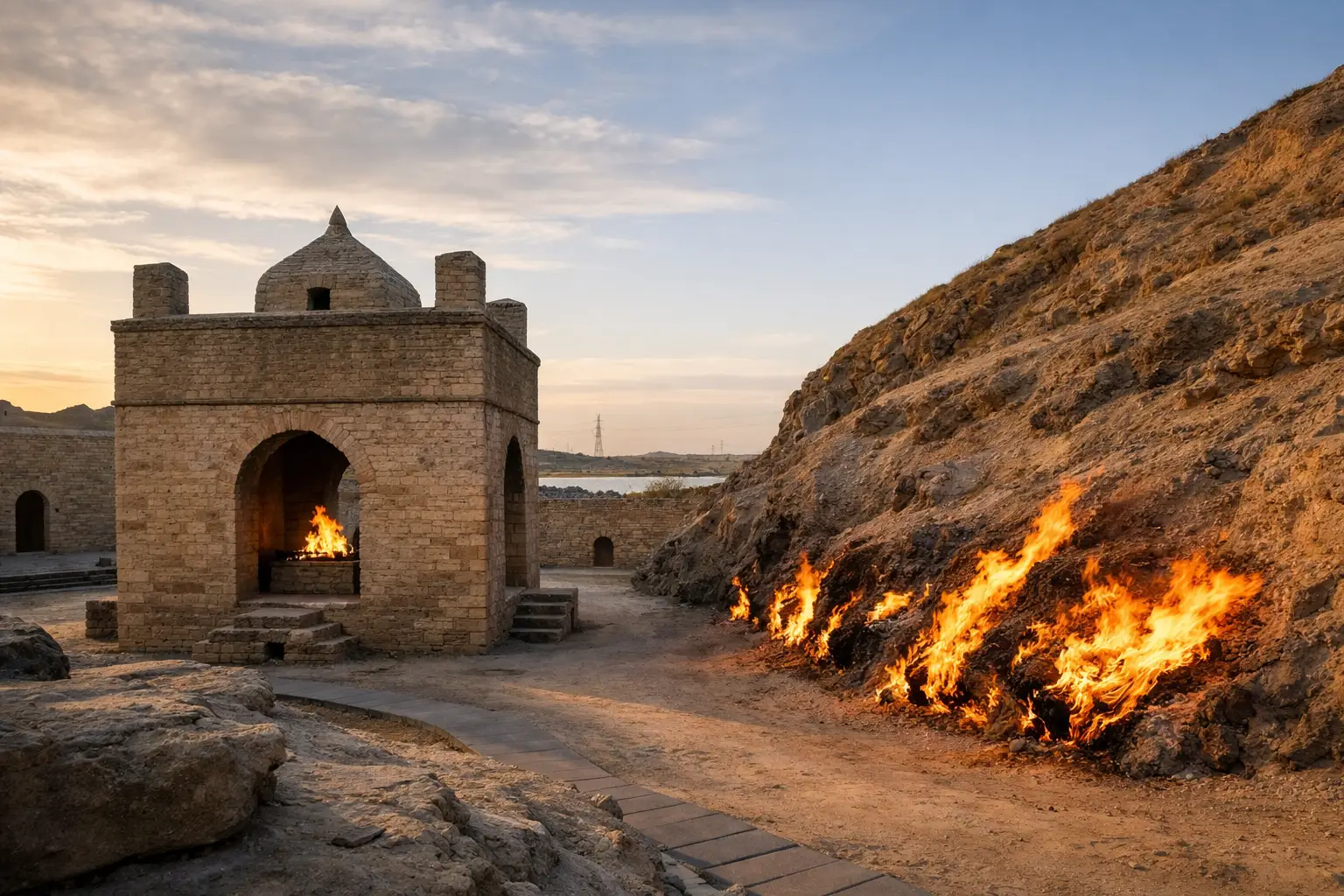
A few kilometers outside Baku, the landscape starts telling a different story. Oil fields, dry hills, and open sky set the scene for one of the most memorable short trips in Azerbaijan – an ateshgah and yanardag tour that brings together religion, geology, and local history in a half-day or full-day experience.
For many travelers, this is the easiest way to see Absheron beyond the city center without worrying about transport, route planning, or time management. It is also one of the most popular choices for first-time visitors because the sites are close to Baku, visually distinctive, and easy to combine with other nearby attractions if you want a fuller day.
Why an Ateshgah and Yanardag tour is worth it
These two places are often grouped together for a simple reason – they make sense as a pair. Ateshgah, the Fire Temple, shows how natural gas shaped spiritual life on the Absheron Peninsula centuries ago. Yanardag, the Burning Mountain, shows the same natural force in its rawest form, with flames rising continuously from the hillside.
Seeing only one gives you part of the picture. Visiting both on the same outing makes the experience more complete. You get the cultural and historical context at Ateshgah, then the dramatic natural spectacle at Yanardag. For travelers with limited time in Azerbaijan, that combination is hard to beat.
There is also a practical advantage. These sites are outside central Baku, and public transportation is not the best option for most international visitors. A guided trip saves time, removes language stress, and gives you useful context that is easy to miss if you arrive on your own.
What you will see at Ateshgah
Ateshgah is located in Surakhani and is one of Azerbaijan’s best-known historical landmarks. The structure you see today is a pentagonal complex with a central altar and surrounding cells that once hosted worshippers, pilgrims, and ascetics. The site is strongly associated with fire worship, and many visitors connect it with Zoroastrianism, though its history is layered and includes Hindu and Sikh influences as well.
That nuance matters. A good guide will explain that Ateshgah is not just a simple ancient temple frozen in time. It reflects centuries of trade, migration, belief, and the natural gas resources that made this part of Absheron so unusual. The flames that once emerged naturally from the ground gave the temple its purpose, and that connection between nature and faith is what makes the site so memorable.
Today, the complex functions as a museum as much as a monument. You can walk through restored chambers, see exhibits that explain the temple’s background, and get a better sense of how travelers and worshippers once used the space. It is compact enough to explore comfortably, but rich enough to reward a slower visit.
What makes Yanardag different
If Ateshgah is reflective, Yanardag is immediate. The attraction is simple and striking – a line of fire burns across the hillside, fed by natural gas escaping through the ground. Unlike the many extinguished natural flames that once gave Azerbaijan its nickname, Land of Fire, Yanardag still burns today.
That is why it leaves such a strong impression on visitors. There is no need for interpretation to understand the visual impact. Even before you hear the scientific explanation, you see the fire moving against the earth and feel the heat coming off the slope.
The modern visitor area is organized and accessible, with paths, viewing zones, and a museum component that adds background. Daytime visits are common, but many travelers prefer to arrive later in the afternoon when the light softens and the flames become more vivid. If you are deciding between a morning trip and a sunset timing, it depends on your schedule, but sunset usually feels more atmospheric.
How long does the tour take?
An ateshgah and yanardag tour from Baku is usually straightforward and does not require a full day unless you want extra stops. In most cases, the experience takes around 4 to 6 hours including hotel pickup, driving time, site visits, and short breaks.
That makes it ideal for travelers who want to keep part of the day free. You can do it after breakfast and still return to Baku in time for dinner, or start later and make it an easy afternoon outing. Families with children often find this timing comfortable because the distances are manageable and there is not too much walking.
If you prefer a slower pace, private touring works especially well. You are not rushed through the monuments, and you can spend more time taking photos, asking questions, or adding nearby places on the Absheron Peninsula.
Should you book a private or group tour?
It depends on what matters most to you. Group tours are usually more budget-friendly and work well for travelers who are mainly looking for transport and a standard itinerary. If you are comfortable moving on a shared schedule, they can be a good fit.
Private tours are the better choice if you want flexibility, direct communication, and a smoother experience from pickup to drop-off. This matters even more for couples, families, and small groups visiting Azerbaijan for the first time. You can set a more relaxed pace, adjust pickup times, and often combine the tour with other sights without the stop-start feeling that can happen on larger tours.
For international visitors, there is also peace of mind in having a local team handle the details. When your time in Baku is limited, convenience is not a small benefit – it is often the difference between a good day and a stressful one.
Best time to take an Ateshgah and Yanardag tour
These sites can be visited year-round, but spring and fall are usually the most comfortable seasons. Summer is absolutely possible, though midday heat on the Absheron Peninsula can feel intense, especially if you are combining several outdoor stops. Winter has fewer crowds and often a clearer, quieter atmosphere, but windy conditions are common.
The time of day also changes the experience. Ateshgah works well in almost any light because much of the interest is architectural and historical. Yanardag, on the other hand, tends to feel more dramatic later in the day. If photos matter to you, a late afternoon departure is often the better option.
What to wear and bring
This is not a demanding excursion, but comfort matters. Wear walking shoes with a stable sole, bring water, and carry a light jacket if you are visiting outside summer. The peninsula can be windy even when Baku feels calm.
Sunglasses and sunscreen are worth having, especially for daytime departures. If you enjoy photography, bring your phone or camera fully charged. Neither site requires hiking gear, but both are more enjoyable when you are dressed for open-air sightseeing rather than city dining.
Can you combine it with other Absheron stops?
Yes, and this is where a customized itinerary can make a big difference. Some travelers want to keep the trip short and focus only on the Fire Temple and Burning Mountain. Others prefer to turn it into a wider Absheron day with places such as the Baku Ateshgah area surroundings, local viewpoints, or cultural stops that fit naturally with the route.
The best version depends on your interests. If history is your priority, you may want more time at Ateshgah and other heritage sites. If you are traveling with children, a shorter route with less driving may be the smarter choice. If you have already seen central Baku, adding peninsula stops can help balance your itinerary with something beyond the usual city highlights.
This is one reason many travelers choose a local operator instead of trying to assemble the day alone. Personalized planning sounds like a small detail until you are trying to coordinate distances, opening hours, and pickups in a place you have never visited before.
What to expect from the experience overall
This tour is not about checking off giant landmarks or spending the entire day on the road. It is about seeing a side of Azerbaijan that explains why fire is so deeply connected to the country’s identity. The scale is manageable, the travel time is reasonable, and the contrast between the two sites keeps the outing interesting from start to finish.
With the right planning, the experience feels easy. You are picked up in Baku, driven comfortably between sites, and guided through places that make much more sense when someone local explains the background. That is exactly why this route remains one of the most requested short trips for visitors staying in the capital.
If you are building your Azerbaijan itinerary and want one excursion that is simple to fit in, visually memorable, and strongly tied to the country’s heritage, this is a very reliable choice. Tours in Azerbaijan can help arrange it in a private, traveler-friendly format so you spend less time figuring things out and more time enjoying where you are.
A good day trip should leave you with more than photos, and this one usually does – a clearer sense of what makes Azerbaijan distinct, just beyond the edges of Baku.